Grow Tent Heater Guide: How to Keep Your Indoor Grow Warm in Winter
Introduction
Winter can make indoor growing more challenging, especially when temperatures drop in grow tents, basements, garages, or other indoor growing spaces.
Cold air can slow plant growth, while excessive heating may create temperature fluctuations, dry out the growing environment, and increase the risk of plant stress. Maintaining a suitable temperature is therefore an important part of managing an indoor garden during colder months.
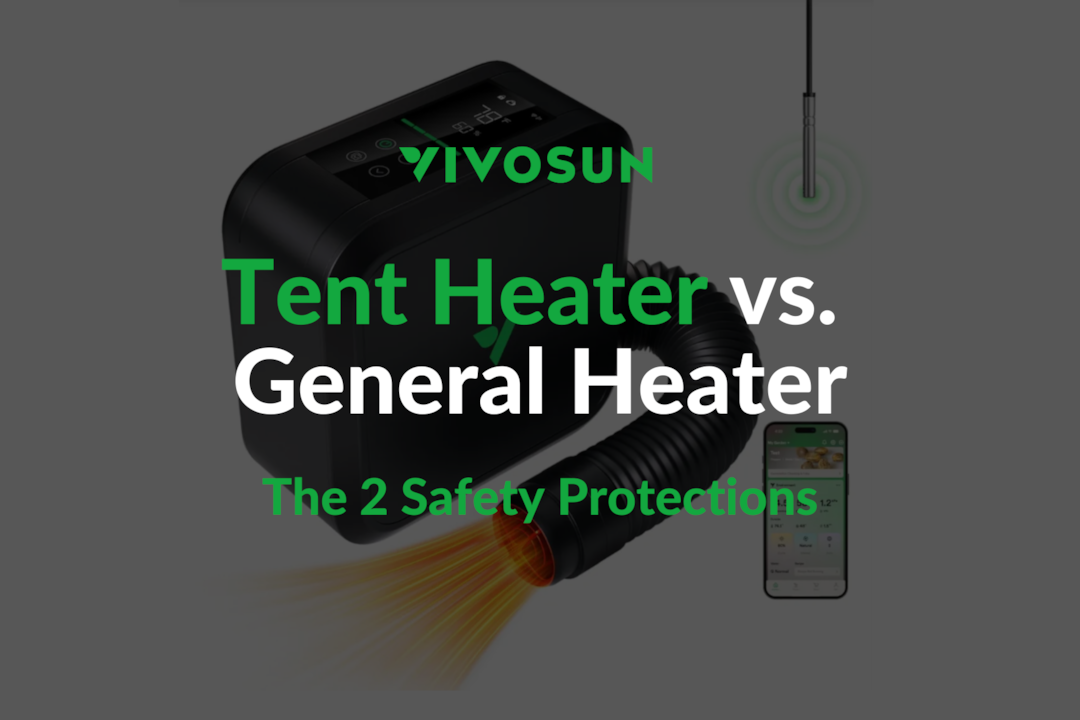
That’s where the VIVOSUN AeroFlux Smart Grow Tent Heater comes in. Designed for indoor growing environments, the AeroFlux series combines PTC heating technology, adjustable heating levels, temperature and VPD monitoring, and smart app connectivity to help growers manage their growing conditions during winter.
The series includes two models to accommodate different grow tent sizes:
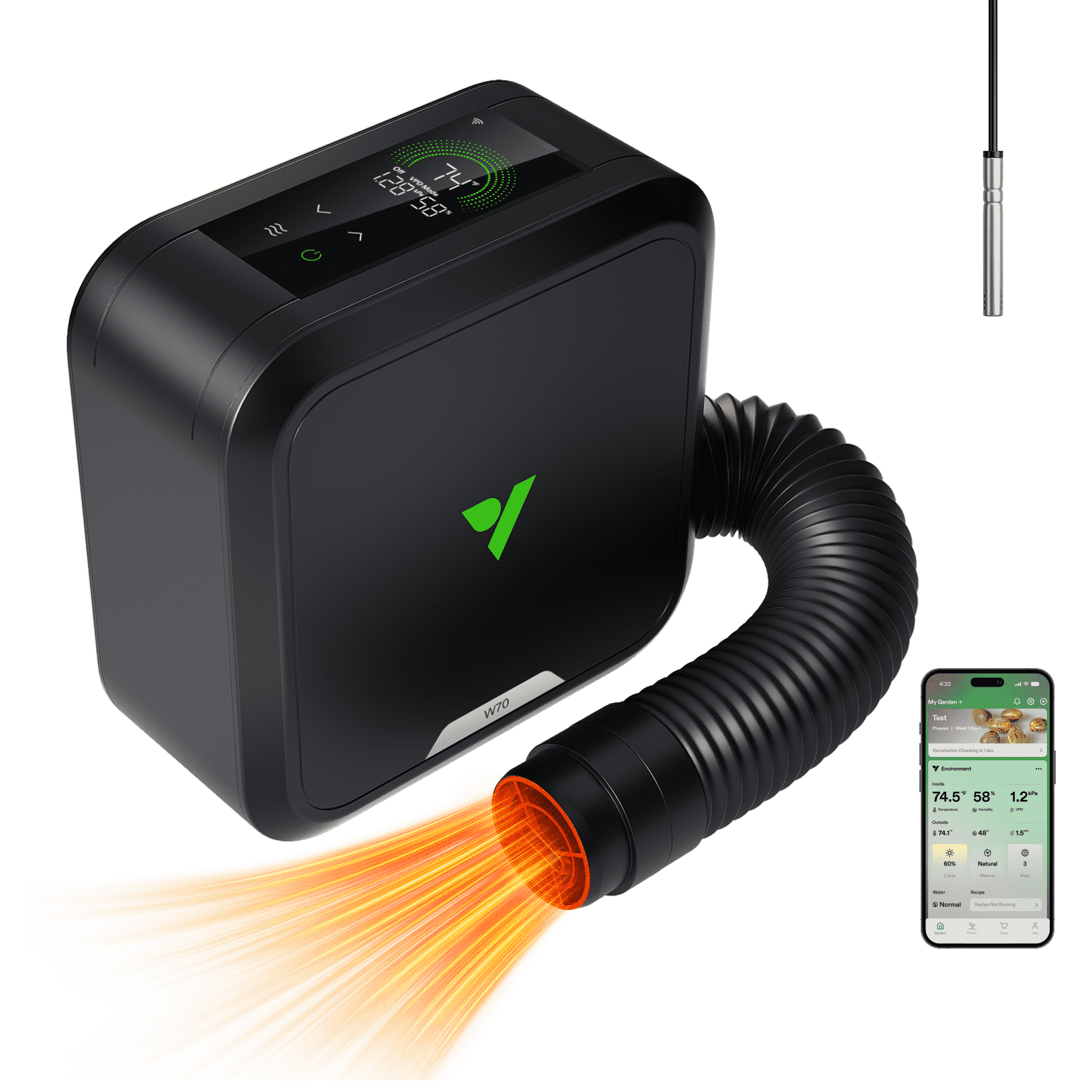
- VIVOSUN AeroFlux W70: 700W of heating power, designed for grow tents up to 4×4 ft.
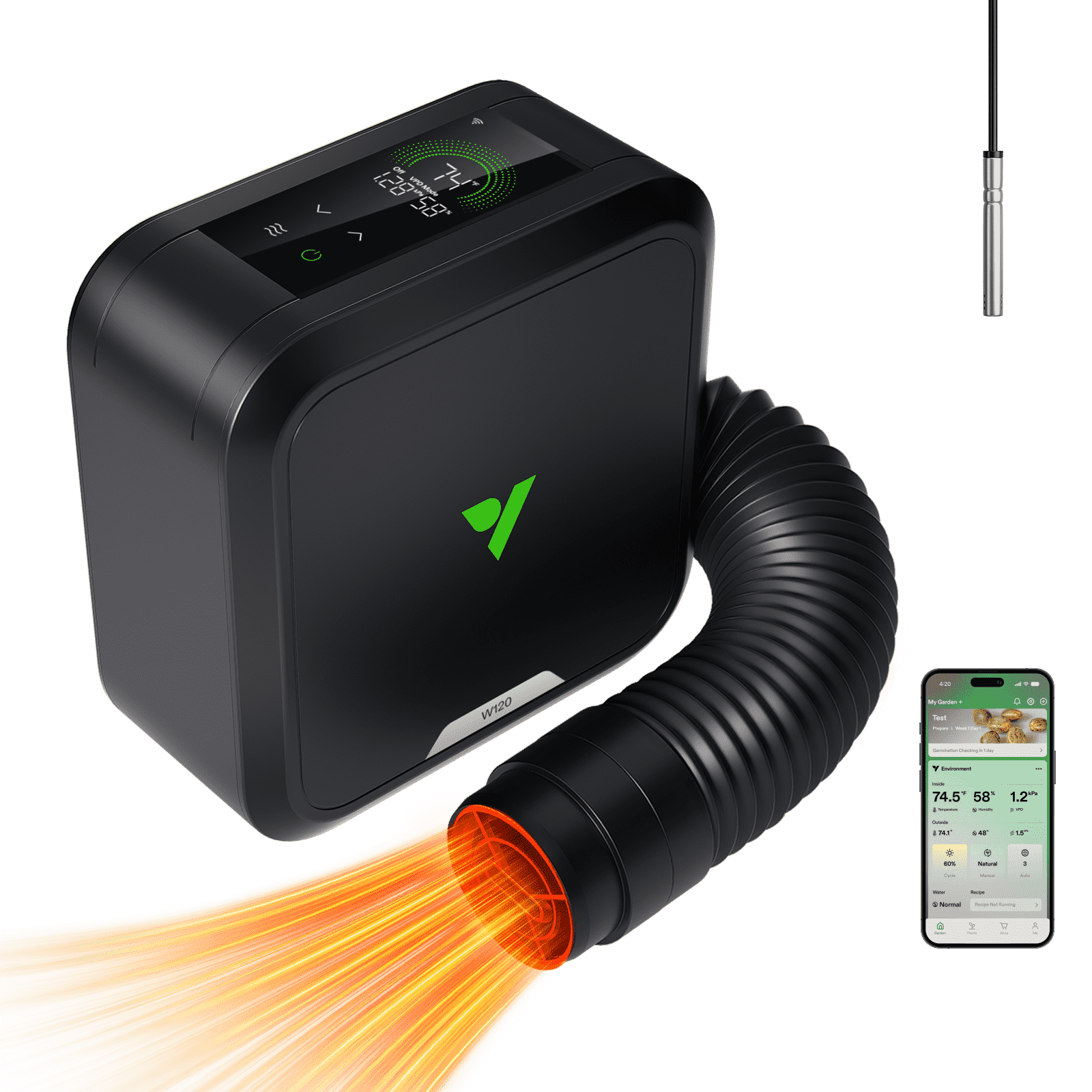
- VIVOSUN AeroFlux W120: 1200W of heating power, designed for grow tents up to 5×5 ft.
Whether you're growing in a small indoor tent or managing a larger growing space, choosing the right grow tent heater can help you maintain more consistent environmental conditions throughout the colder months.
4 Reasons Why Indoor Growers Need a Grow Tent Heater
Winter growing presents several environmental challenges. Understanding these issues can help you determine when supplemental heating is necessary.
1. Cold Temperatures Can Slow Plant Growth
Plants depend on suitable environmental conditions for photosynthesis, nutrient uptake, and other physiological processes.
When temperatures fall below the preferred range for a particular plant, growth may slow down. Cold conditions can also affect root activity and nutrient availability.
Different plants have different temperature requirements, so growers should adjust their environmental settings according to the crops they are growing.
2. Temperature Fluctuations Can Stress Plants
A grow tent may experience significant temperature differences between day and night.
For example, a tent located in a cold garage may warm up during the lighting period but cool down significantly after the lights turn off.
Large temperature fluctuations can make it more difficult to maintain consistent growing conditions.
A grow tent heater with adjustable temperature controls can provide supplemental heat when the environment becomes too cold.
3. Heating Affects Humidity and VPD
Vapor Pressure Deficit (VPD) describes the relationship between air temperature, moisture, and the atmospheric demand for water vapor.
When temperature increases without a corresponding increase in moisture, relative humidity generally decreases. This can affect VPD and plant transpiration.
For indoor growers, maintaining an appropriate temperature is therefore an important part of managing VPD.
However, heating alone does not guarantee an ideal VPD. Relative humidity, plant type, growth stage, and environmental conditions must also be considered.
4. General Space Heaters May Lack Growing-Focused Controls
A conventional space heater can warm a room, but many models are designed primarily for household comfort rather than indoor growing.
Depending on the model, growers may have limited options for adjusting heating output, monitoring environmental conditions, or integrating heating with other growing equipment.
A dedicated grow tent heater with smart controls can provide additional flexibility for managing temperature as part of an indoor growing setup.
Plant Heater vs. General Heater: What's the Difference?
A plant heater is a heating device used to maintain suitable temperatures in an indoor growing environment.
Unlike general-purpose space heaters, growing-focused heating solutions may offer features that help growers monitor and adjust environmental conditions.
Key considerations include:
- Temperature control: Adjustable settings help growers manage heating according to environmental conditions.
- Heating output: Multiple heating levels provide more flexibility than a fixed-output heating setup.
- Environmental monitoring: Temperature and humidity measurements help growers understand the conditions inside the tent.
- Smart controls: Compatible app integration can make it easier to monitor and adjust settings.
- Safety features: Protection mechanisms can provide additional safeguards when the heater is operated according to its instructions.
General-purpose heaters can also offer thermostats, multiple heating levels, and safety protections. Features vary by model, so growers should compare actual specifications rather than assume every household heater lacks these capabilities.
For indoor growing, the key is choosing a heater that meets the heating requirements of your space and can be operated safely in the intended environment.
VIVOSUN AeroFlux Smart Grow Tent Heater: Features and Benefits
The VIVOSUN AeroFlux Grow Tent Heater series is designed to help indoor growers manage temperature through adjustable heating and smart environmental monitoring.
Available in 700W and 1200W models, the series offers different heating capacities for different grow tent sizes.
1. PTC Heating Technology
The AeroFlux series uses a PTC heating element.
PTC stands for Positive Temperature Coefficient. PTC heating elements are designed to increase electrical resistance as their temperature rises, a characteristic that helps regulate heating behavior.
This technology is used in various heating applications because of its temperature-dependent electrical properties.
However, PTC technology does not eliminate overheating risks. Growers should always follow the manufacturer's instructions, maintain the required clearance, and operate the heater only under approved conditions.
2. Five Adjustable Heating Levels
Both AeroFlux models feature five adjustable heating levels, allowing growers to adapt heating output to changing environmental conditions.
Adjustable heating can be useful when:
- The surrounding room temperature changes.
- The grow tent requires different amounts of supplemental heat.
- Growers want to reduce unnecessary heating.
- Environmental conditions vary between day and night.
The appropriate setting depends on the actual temperature inside the tent, the surrounding environment, and the temperature requirements of the plants.
3. Temperature and VPD Monitoring
Temperature is one of the most important environmental factors affecting indoor growing conditions.
VPD provides additional information about the relationship between temperature and humidity.
By monitoring these conditions, growers can make more informed decisions about heating and environmental management.
The AeroFlux series supports temperature and VPD monitoring through its compatible controls.
It's important to understand that a heater does not independently control every factor affecting VPD. If relative humidity becomes too low, growers may need to adjust humidification or ventilation rather than relying on heating adjustments alone.
4. Smart App Integration
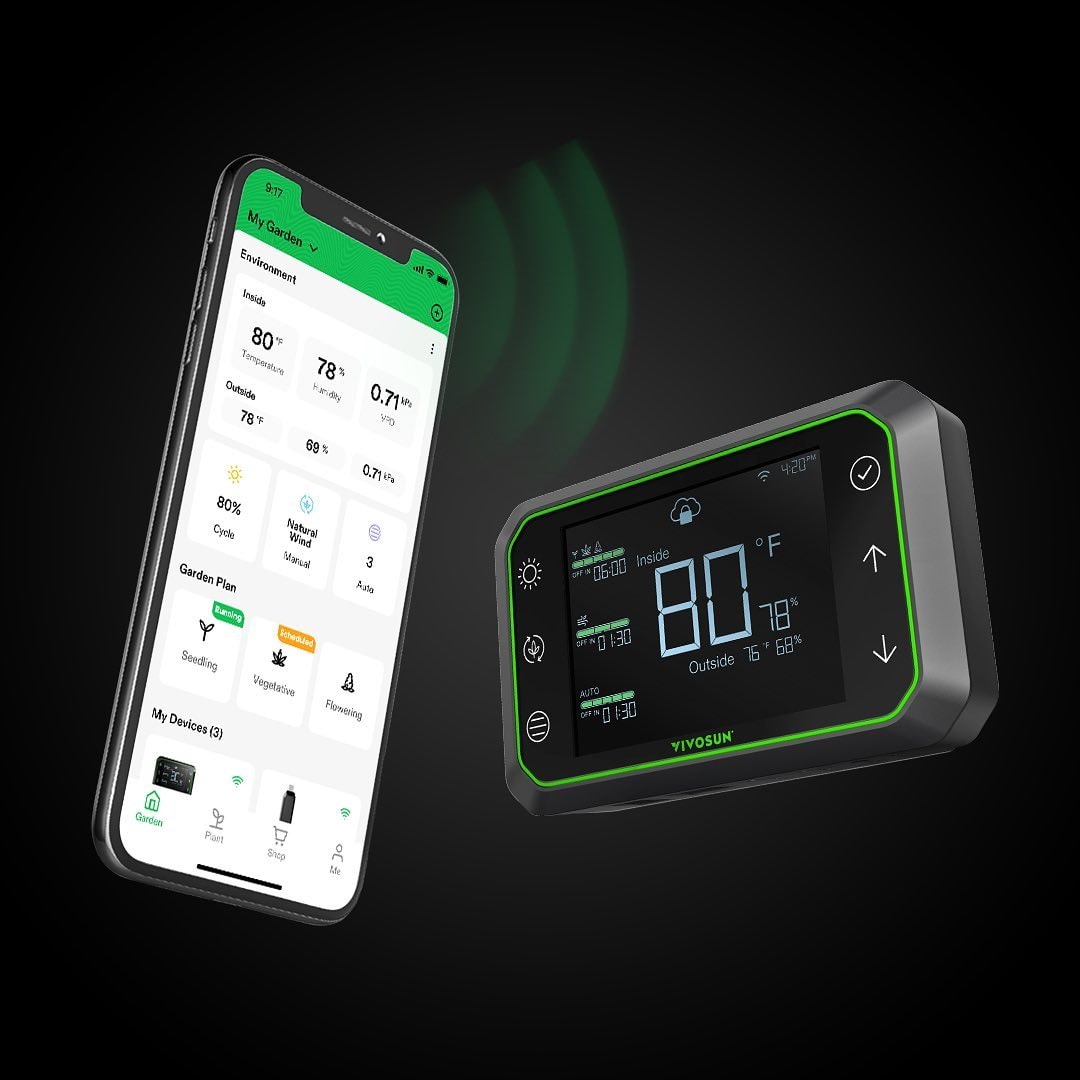
The AeroFlux series connects to the VIVOSUN App, providing growers with an additional way to monitor and manage their growing environment.
Depending on the model, settings, and supported functions, growers can use compatible app controls to:
- Monitor environmental conditions.
- Adjust heating settings.
- Configure temperature targets.
- Manage supported heating schedules or recipes.
- Review temperature and VPD information.
For growers who already use compatible VIVOSUN equipment, app integration can make environmental management more convenient.
5. Built-In Safety Features
The AeroFlux series includes safety-related features such as:
- Tip-over protection: Helps protect against certain risks if the heater is accidentally knocked over.
- Overheat protection: Shuts off heating when the applicable overheat protection threshold is reached.
- Flame-retardant materials: Provide an additional material safety feature.
These features provide additional safeguards, but they do not make the heater risk-free.
Always follow the product manual, maintain the required clearance from plants and combustible materials, and avoid using the heater in conditions outside its intended operating range.
What Size Heater Do You Need for a Grow Tent?
Choosing the right grow tent heater depends on more than wattage alone.
Grow tent dimensions, surrounding temperature, insulation, ventilation, and the temperature requirements of your plants all affect how much supplemental heat is needed.
AeroFlux W70: 700W Grow Tent Heater
The VIVOSUN AeroFlux W70 provides 700W of heating power and is designed for grow tents up to 4×4 ft.
It may be a suitable option for growers who:
- Use a 4×4 ft grow tent.
- Need supplemental heating during winter.
- Grow in a basement or other relatively cool indoor space.
- Want adjustable heating and app-based monitoring.
- Prefer a lower heating capacity than the 1200W model.
AeroFlux W70 Specifications
- Heating Power: 700W
- Recommended Coverage: Up to 4×4 ft grow tent
- Heating Technology: PTC
- Heating Levels: 5
- Environmental Monitoring: Temperature and VPD
- App Integration: VIVOSUN App
- Sensor Probe: 10 ft
- Input Voltage: 120V / 230V
- Frequency: 50/60Hz
For full product details, visit the VIVOSUN AeroFlux W70 product page.
AeroFlux W120: 1200W Grow Tent Heater
The VIVOSUN AeroFlux W120 delivers 1200W of heating power and is designed for grow tents up to 5×5 ft.
With a higher heating capacity than the W70, the W120 may be a better starting point for growers who:
- Use a 5×5 ft grow tent.
- Need additional supplemental heating capacity.
- Grow in colder indoor environments.
- Want adjustable heating and smart environmental monitoring.
AeroFlux W120 Specifications
- Heating Power: 1200W
- Recommended Coverage: Up to 5×5 ft grow tent
- Heating Technology: PTC
- Heating Levels: 5
- Environmental Monitoring: Temperature and VPD
- App Integration: VIVOSUN App
- Sensor Probe: 10 ft
- Input Voltage: 120V / 230V
- Frequency: 50/60Hz
For full product details, visit the VIVOSUN AeroFlux W120 product page.
AeroFlux W70 vs. W120: Which Model Should You Choose?
| Feature | AeroFlux W70 | AeroFlux W120 |
|---|---|---|
| Heating Power | 700W | 1200W |
| Recommended Grow Tent Size | Up to 4×4 ft | Up to 5×5 ft |
| Heating Technology | PTC | PTC |
| Heating Levels | 5 | 5 |
| Temperature Monitoring | Yes | Yes |
| VPD Monitoring | Yes | Yes |
| App Connectivity | Yes | Yes |
| Recommended Starting Point | Smaller grow tents | Larger grow tents |
Which model is right for your grow tent?
For a 4×4 ft grow tent, the AeroFlux W70 is the recommended starting point.
For a 5×5 ft grow tent, the AeroFlux W120 offers the higher heating capacity.
However, tent dimensions alone do not determine heating requirements. A well-insulated tent in a heated room may require less supplemental heat than a tent located in an unheated garage.
Consider your surrounding temperature, insulation, ventilation, and plant requirements before choosing a heater.
Comparison: VIVOSUN AeroFlux vs. General Heaters
When comparing a dedicated grow tent heater with a general-purpose space heater, focus on the actual features available rather than assuming all heaters offer the same capabilities.
| Feature | VIVOSUN AeroFlux | General Space Heater |
|---|---|---|
| Heating Technology | PTC | Depends on the model |
| Heating Power | 700W or 1200W | Varies by model |
| Heating Adjustment | 5 levels | Varies by model |
| Temperature Monitoring | Supported | Depends on the model |
| VPD Monitoring | Supported | Not typically a standard feature |
| App Integration | VIVOSUN App | Depends on the model |
| Grow-Focused Controls | Temperature and VPD monitoring | Depends on the model |
| Safety Protections | Includes specified protection features | Depends on the model |
The main advantage of the AeroFlux series is its combination of adjustable heating, environmental monitoring, and smart controls designed for indoor growing.
A general space heater may still provide supplemental heat, but growers should verify that the specific model is suitable for the intended environment and can be operated safely.
5 Tips for Using a Grow Tent Heater in Winter
Choosing the right heater is only one part of maintaining a suitable indoor growing environment.
These practical steps can help you manage temperature more effectively during colder months.
1. Improve Insulation Around Your Growing Space
If your grow tent is located in a cold basement or garage, consider reducing heat loss from the surrounding room.
Improving the insulation of the room may help maintain a more stable temperature and reduce the amount of supplemental heating required.
Do not cover the heater or block required ventilation openings with blankets or insulation materials.
2. Monitor Temperature During the Coldest Periods
The temperature during the middle of the day may not represent the coldest conditions inside your grow tent.
Monitor temperatures during the dark period and early morning to determine whether supplemental heating is necessary.
Use actual readings to guide heating adjustments rather than relying only on the room thermostat.
3. Position the Heater According to the Product Manual
Heater placement affects how heat moves through a growing space.
Follow the manufacturer's instructions for installation, clearance, and positioning.
Avoid placing the heater:
- Directly against plant leaves.
- Near water reservoirs or areas prone to splashing.
- Against tent walls or combustible materials.
- Where airflow is blocked.
- Where power cords may be damaged or exposed to water.
Do not assume that placing a heater inside a grow tent is always the most efficient or safest option. Use the placement recommended for the specific model and growing setup.
4. Monitor Temperature and Humidity Together
Heating can change relative humidity.
When air temperature increases without a corresponding increase in moisture, relative humidity generally decreases.
This can affect VPD and plant transpiration.
Monitor temperature and humidity together to understand how heating affects your growing environment.
If humidity becomes too low, consider whether humidification, ventilation adjustments, or other environmental changes are needed.
5. Follow Electrical and Fire Safety Precautions
Indoor growing environments often contain electrical equipment, water reservoirs, irrigation systems, and combustible materials.
Always:
- Follow the heater's operating manual.
- Use an appropriate electrical circuit.
- Keep the heater away from water.
- Maintain the required clearance.
- Inspect cords and electrical connections.
- Avoid covering the heater.
- Keep combustible materials away.
- Use the heater only in approved conditions.
Do not leave a heater operating unattended or overnight unless the manufacturer's instructions explicitly permit that use and the installation meets all required safety conditions.
How Does VPD Affect Grow Tent Heating?
VPD is an important concept for indoor growers because it helps describe the relationship between temperature and humidity.
However, VPD should not be treated as a universal temperature target.
What Is VPD?
Vapor Pressure Deficit measures the difference between the amount of moisture present in the air and the amount of moisture the air could hold at a given temperature.
A higher VPD generally indicates greater atmospheric demand for water vapor, while a lower VPD generally indicates lower atmospheric demand.
Plant transpiration is influenced by VPD, but it is also affected by:
- Plant species.
- Growth stage.
- Leaf temperature.
- Root health.
- Air movement.
- Water availability.
Why Does Temperature Matter for VPD?
Temperature affects the air's capacity to hold water vapor.
When temperature increases while moisture content remains unchanged, relative humidity decreases.
This means heating can change VPD even when the actual amount of moisture in the air has not changed.
For example, if a grow tent becomes warmer during the lighting period, its VPD may increase.
Growers should therefore evaluate temperature and humidity together.
Can a Grow Tent Heater Control VPD?
A grow tent heater can influence VPD by changing temperature.
However, it does not independently control all the variables that determine VPD.
A heater may help maintain a target temperature, while growers may need separate humidification or ventilation adjustments to maintain suitable moisture conditions.
The AeroFlux series supports temperature and VPD monitoring, helping growers evaluate their environmental conditions.
For best results, use the heater as part of a broader environmental management strategy rather than relying on heating alone.
Grow Tent Heater Safety: What Indoor Growers Should Know
Safety is particularly important when using heating equipment in an indoor growing environment.
A grow tent may contain electrical equipment, water, plastic materials, plants, and other objects that require careful placement.
Built-In Safety Features
The VIVOSUN AeroFlux series includes:
- Tip-over protection: Helps protect against certain risks if the heater is accidentally knocked over.
- Overheat protection: Shuts off heating when the applicable protection threshold is reached.
- Flame-retardant materials: Provide an additional material safety feature.
These features provide additional safeguards, but they do not eliminate the need for proper installation and supervision.
Electrical Safety
Before operating a heater, verify:
- The correct input voltage.
- The circuit's available capacity.
- The condition of the power cord.
- The suitability of the electrical outlet.
- The manufacturer's requirements for extension cords, if any.
For reference, a 1200W heater operating at 120V draws approximately 10 amps, while a 700W heater operating at 120V draws approximately 5.8 amps.
These figures represent approximate current draw under the stated conditions. Actual electrical requirements should be verified using the product label and applicable electrical standards.
Avoid overloading circuits, using damaged cords, or operating heaters with unsuitable extension cords.
Water and Humidity
Indoor grow environments often contain water reservoirs, humidifiers, irrigation systems, and drainage equipment.
Keep the heater and electrical connections away from water exposure.
Do not place the heater where condensation or splashing could reach it.
Clearance and Placement
Maintain the clearances specified in the product manual.
Do not place the heater directly against tent fabric, plants, or other combustible materials.
Ensure that airflow is not obstructed.
Can You Leave a Grow Tent Heater Running Overnight?
Whether a heater can operate overnight depends on the product's instructions and the conditions of installation.
Do not assume that tip-over protection or overheat shutoff makes unattended operation automatically safe.
Always follow the manufacturer's approved operating conditions and ensure that the electrical installation, clearance, and growing environment meet all safety requirements.
Frequently Asked Questions About Grow Tent Heaters
What size heater do I need for a grow tent?
The appropriate heater depends on grow tent size, surrounding room temperature, insulation, ventilation, and plant temperature requirements.
The VIVOSUN AeroFlux W70 provides 700W of heating power and is designed for grow tents up to 4×4 ft.
The AeroFlux W120 provides 1200W and is designed for grow tents up to 5×5 ft.
These coverage recommendations are starting points. Actual heating requirements depend on the growing environment.
Is a 700W heater enough for a 4×4 grow tent?
The AeroFlux W70 is designed for grow tents up to 4×4 ft.
Whether 700W is sufficient depends on the surrounding temperature, insulation, ventilation, and the desired growing temperature.
A tent in a relatively warm room may require less supplemental heat than one located in an unheated garage.
Is a 1200W heater suitable for a 5×5 grow tent?
The AeroFlux W120 provides 1200W of heating power and is designed for grow tents up to 5×5 ft.
It offers a higher heating capacity than the W70.
However, actual heating performance depends on the surrounding environment and the amount of heat lost from the tent.
What is the difference between the AeroFlux W70 and W120?
The main difference is heating power and recommended coverage.
The W70 provides 700W and is designed for grow tents up to 4×4 ft.
The W120 provides 1200W and is designed for grow tents up to 5×5 ft.
Both models feature PTC heating technology, five adjustable heating levels, temperature and VPD monitoring, and VIVOSUN App connectivity.
Can I use a regular space heater in a grow tent?
A regular space heater may provide supplemental heat, but it must be used according to its manufacturer's instructions.
Not every household heater is designed for enclosed growing spaces.
Before using a heater, verify its approved operating environment, electrical requirements, clearance, and safety instructions.
A dedicated grow tent heater may offer more suitable environmental monitoring and control options for indoor growing.
Does a grow tent heater lower humidity?
Heating can lower relative humidity when the amount of moisture in the air remains unchanged.
However, the actual humidity change depends on the environment.
Monitor temperature and relative humidity together to understand how heating affects your growing space.
Can a grow tent heater control VPD?
A heater can influence VPD by changing temperature.
However, VPD also depends on humidity and other environmental conditions.
A grow tent heater with VPD monitoring can help growers evaluate environmental conditions, but additional humidity management may be necessary.
Is the AeroFlux heater compatible with the VIVOSUN App?
Yes. The AeroFlux W70 and W120 support VIVOSUN App connectivity.
Compatible controls allow growers to monitor environmental conditions and adjust heating settings through the app.
Can I leave a grow tent heater running overnight?
Follow the manufacturer's operating instructions.
Do not assume that safety features make unattended or overnight operation automatically safe.
Verify the heater's approved operating conditions and ensure that the electrical installation, clearance, and growing environment meet all safety requirements.
What is the best temperature for a grow tent in winter?
There is no single temperature that is ideal for every plant.
Temperature requirements vary according to plant species, growth stage, humidity, and growing conditions.
Use plant-specific guidance and monitor environmental conditions rather than relying on a universal temperature setting.
Conclusion
Winter indoor growing requires careful environmental management.
Cold temperatures can affect plant growth, while excessive heating may create temperature fluctuations and reduce relative humidity.
Choosing the right grow tent heater can help growers maintain more suitable conditions, but heating should always be considered alongside insulation, ventilation, humidity, and electrical safety.
The VIVOSUN AeroFlux series offers two heating options for different grow tent sizes.
The AeroFlux W70 provides 700W of heating power for grow tents up to 4×4 ft, while the AeroFlux W120 provides 1200W for grow tents up to 5×5 ft.
Both models feature PTC heating technology, five adjustable heating levels, temperature and VPD monitoring, and VIVOSUN App connectivity.
For growers looking to improve winter environmental management, the AeroFlux series provides a dedicated heating solution with growing-focused monitoring and control features.
Choose the model that fits your growing space, follow the manufacturer's instructions, and monitor temperature and humidity together to create a more consistent indoor growing environment.