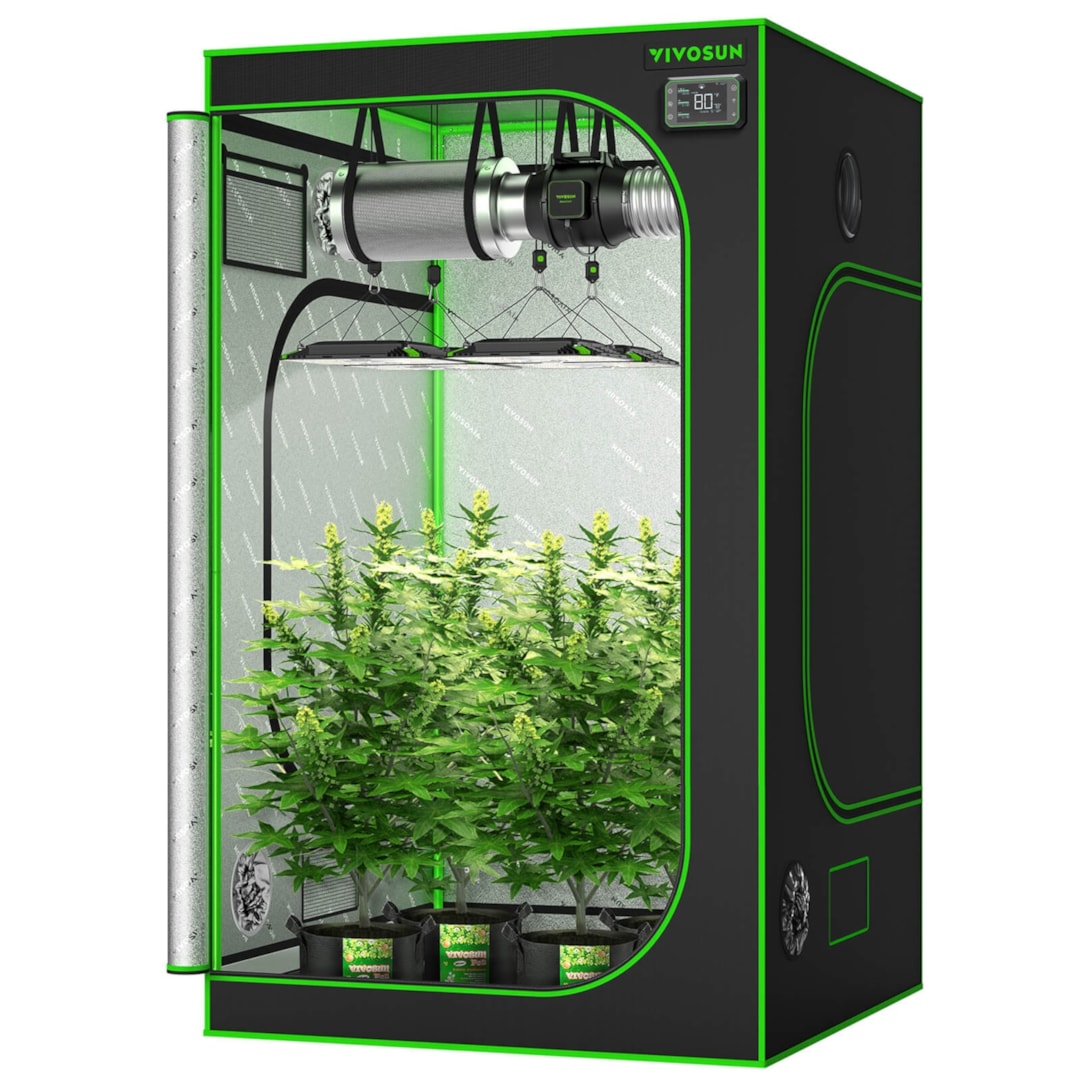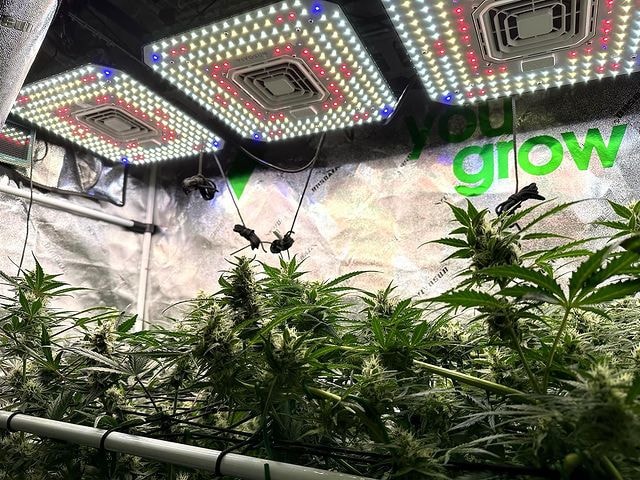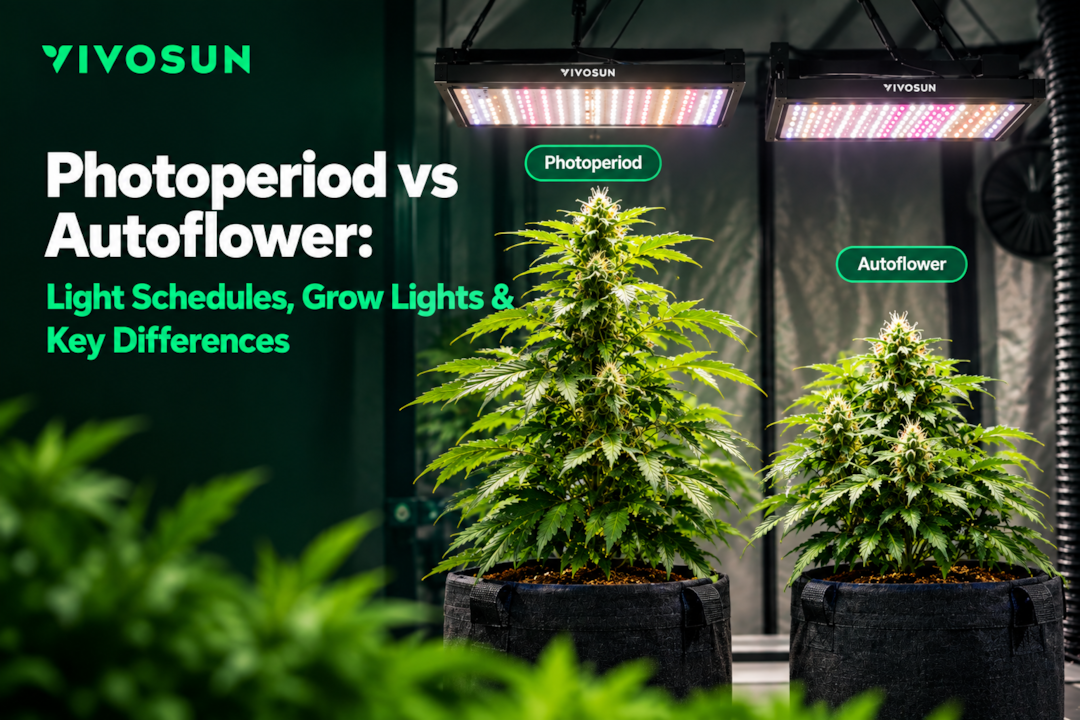
This difference also affects how growers approach lighting — from light schedules to fixture selection to light intensity. Whichever type you grow, the fixture doing the work matters just as much as the schedule. Below, we break down the differences and show where a VIVOSUN LED grow light fits into each strategy.
Photoperiod vs Autoflower: What's the Difference?
| Factor | Photoperiod | Autoflower |
|---|---|---|
| Flowering trigger | Light cycle | Age |
| Light schedule | Changes by stage | More flexible |
| Growth period | Adjustable | More fixed |
| Plant size | Generally larger | Generally more compact |
| Training window | Longer | Shorter |
| Lighting considerations | Requires schedule control | Consistent lighting is easier |
Which One Is Better?
- Want more control over plant size, yield, and timing → photoperiod
- Want a shorter, simpler grow cycle → autoflower
Neither is "better" outright — the right choice depends on your space, your schedule, and how hands-on you want to be. What both share is a dependency on a grow light that can actually deliver consistent, adjustable PAR light day after day. This is where a dimmable, full-spectrum fixture like VIVOSUN's LumaLight or AeroLight series earns its keep, since both plant types are grown under it at some point in their life cycle.
What Is a Photoperiod Plant?
Photoperiod plants generally have a higher yield ceiling because their vegetative period can be extended, while autoflowers have a more compact and time-limited growth cycle. Growers can keep a photoperiod plant vegetating for weeks or months longer, building a larger frame and more bud sites before switching the light schedule to force flowering.
How Photoperiodism Works
Photoperiod cannabis and many other flowering plants read the length of uninterrupted darkness, not just the length of light, to determine what stage of growth they should be in. Photoperiod-sensitive plants respond to the duration of the uninterrupted dark period, and the critical photoperiod varies by cultivar.
How Light Affects Flowering
Because flowering is tied to the light cycle, any light leaks during the dark period (a hallway light, a phone screen, a poorly sealed tent) can stress the plant or delay flowering. This is one reason growers with photoperiod plants often invest in a light-tight tent and a fixture with a built-in timer or smart controller — such as VIVOSUN's GrowHub-compatible LumaLight and AeroLight fixtures — so the schedule runs the same way every single day without manual switching.
What Is an Autoflower Plant?
Autoflowering varieties (most commonly bred with ruderalis genetics) transition from vegetative growth to flowering largely based on age rather than light-cycle changes.
How Autoflowering Works
vegetative stage → flowering stage
Autoflowers move through this transition automatically, usually within a few weeks of germination, regardless of how many hours of light or darkness they receive. There's no need to "flip" the light schedule to trigger blooming.
How Autoflowers Differ From Photoperiod Plants
- They don't require a dark-period trigger to flower
- Their total life cycle is shorter and harder to extend
- Light leaks are far less disruptive
- Training techniques need to happen earlier and faster because the vegetative window is short
Photoperiod vs Autoflower Light Schedules
Photoperiod Light Schedule
- Seedling/Vegetative: 18/6 (18 hours light, 6 hours dark) is standard; some growers use 20/4 or even 24/0
- Flowering: 12/12 to trigger and sustain bloom
- Consistency matters: Light interruptions during the dark period can interfere with normal flowering responses and should be minimized.
Autoflower Light Schedule
- Commonly run at 18/6 or 20/4 throughout the entire life cycle, from seed to harvest
- Some growers use 24/0 for maximum total light, though many prefer giving plants a short dark period to rest
- No light-schedule "flip" is required at any point
Do Autoflowers Need a 12/12 Light Cycle?
No. Autoflowers will flower on their own timeline regardless of the light schedule, so 12/12 isn't necessary. In fact, running 12/12 usually reduces total light received (and therefore yield potential) without speeding up flowering, since the trigger is age-based, not light-based. Most growers get better results keeping autoflowers on an 18/6-to-20/4 schedule for the entire cycle.
Grow Light Requirements for Photoperiod vs Autoflower
Light Coverage
The real question isn't "photoperiod plants need a bigger light, autoflowers need a smaller one." Plant genetics don't determine fixture size — grow space, canopy size, and light output do.
grow space → canopy → light coverage
A large photoperiod plant vegetated for months will eventually need wide, even coverage across a broad canopy. But a densely packed group of small autoflowers grown scrog-style in the same tent can need just as much total coverage — sometimes more, because you're lighting more individual canopy points rather than one large plant.
Match the fixture to the footprint, not the strain type:
| Grow Tent / Canopy Size | Suggested VIVOSUN Fixture |
|---|---|
| 2×2 ft | LumaLight 100W or AeroLight A100 |
| 3×3 ft | LumaLight 320W or AeroLight 320W |
| 4×4 ft | LumaLight 400W or AeroLight 550W |
| 4×4 ft (dense canopy / deep penetration) | LumaLight 500W (deep canopy penetration) or AeroLight 550W |
| 5×5 ft | LumaLight 750W or AeroLight 850W |
Whether the canopy underneath is one tall photoperiod plant or a dozen compact autoflowers, the fixture's job is the same: deliver uniform, edge-to-edge coverage so no bud site is left under-lit.
PPFD and DLI
PPFD measures instantaneous light intensity, while DLI represents the total amount of photosynthetically active light received over a 24-hour period.
PPFD × photoperiod → DLI
This formula is exactly why light schedule and fixture output can't be considered separately:
-
Changing photoperiod changes DLI at a given PPFD, which is why growers should consider both daily light duration and canopy-level PPFD rather than looking at either metric alone.
-
An autoflower running a steady 18/6 or 20/4 the entire cycle keeps DLI more stable by default, but only if the fixture's output stays consistent as the canopy fills in and shading increases.
VIVOSUN LumaLight and AeroLight fixtures include stepped or knob dimming (commonly 25–100%), which lets growers raise intensity as the schedule shortens or as the canopy thickens — keeping DLI on target through every stage instead of just hoping the fixed light schedule does the work.
Light Intensity and Plant Growth
Too little light intensity limits photosynthesis and stretches internodes; too much can cause light stress, bleaching, or wasted energy the plant can't use. General PPFD targets:
- Seedling: 100–300 µmol/m²/s
- Vegetative: 300–600 µmol/m²/s
- Flowering: 600–1000+ µmol/m²/s
These are general reference ranges, not universal targets. Actual requirements vary by cultivar, environment, and growing conditions.
Because autoflowers spend their entire life on one light schedule, ramping intensity gradually (rather than flipping schedules) is the main lever growers have to guide them from seedling-level to flowering-level light exposure — another reason a dimmable driver, not just a powerful one, matters.
Full-Spectrum LED Grow Lights
LED grow lights have become a popular alternative to traditional HPS and CMH fixtures for indoor growing, for a few consistent reasons:
- LED efficiency: more usable PAR light per watt of electricity consumed
- Heat management: LED fixtures generally produce less radiant heat than traditional HID lighting, but mounting height should still follow the fixture manufacturer's recommendations and canopy response
- Dimming: stepped or continuous dimming to match each growth stage precisely
- Spectrum: full-spectrum white plus deep red and far-red diodes to support both vegetative growth and flower development in one fixture
- Coverage: diode layout and reflector design determine how evenly light reaches the edges of the canopy, not just the center
- Energy consumption: lower running costs over a multi-month grow compared to legacy HPS setups
VIVOSUN's LumaLight series combines full-spectrum LED output with adjustable intensity, giving growers more control over light exposure as the canopy develops. The dimming capability is useful when moving from lower-intensity early growth to higher-intensity lighting later in the cycle, while GrowHub compatibility can simplify automated scheduling and daily light management.
The key advantage is flexibility rather than a specific plant type: the same fixture can support different lighting requirements when properly sized for the growing space. When comparing models, focus on coverage area, PPFD performance, dimming range, mounting height, and controller compatibility rather than choosing a fixture based on wattage alone.
Choosing the Right Grow Light for Your Growing Space
Work backward from your space, not your strain:
- Measure your canopy footprint (2×2, 3×3, 4×4, 5×5, etc.)
- Check the fixture's rated coverage area at your target PPFD, not just its wattage
- Confirm dimming range so you can scale intensity from seedling through flower without buying a second light
- Look for smart/app control if you want automated schedules — critical for photoperiod growers who can't afford light leaks, and convenient for autoflower growers who want a hands-off cycle
- Factor in mounting height and heat output for your tent's vertical clearance
Browse the full lineup — including LumaLight panels, AeroLight fan-integrated fixtures, and LumaRay under-canopy bars — on the VIVOSUN grow light page, or start with the compact 2x2 grow tent kit.
Photoperiod vs Autoflower: Which Is Better for You?
Choose Photoperiod If...
- You want to control final plant size and yield through vegetative timing
- You have room and time for topping, LST, or SCROG training
- You can maintain a light-tight space for an uninterrupted dark period
- You want maximum yield potential and don't mind a longer grow cycle
Choose Autoflower If...
- You want a shorter, more predictable time from seed to harvest
- You have a smaller space and want compact, easy-to-manage plants
- You don't want to worry about light leaks or flipping schedules
- You're growing multiple small plants at once rather than one large plant
Common Grow Light Mistakes
- Choosing a Light Based Only on Wattage — wattage tells you power draw, not how much usable PAR light actually reaches your canopy. Two "200W" lights can have very different real-world PPFD.
- Ignoring Coverage Area — a fixture rated for a 2×2 tent will leave the corners of a 4×4 tent under-lit, no matter how bright it looks in the center.
- Setting Light Intensity Too High — cranking a dimmable fixture to 100% from day one of seedling stage causes stress; ramp intensity up gradually as in the PPFD targets above.
- Not Considering DLI — a schedule change (like flipping to 12/12) changes total daily light even if PPFD stays the same; adjust intensity to compensate.
- Using an Inconsistent Light Schedule — manual timers get forgotten. A smart, app-connected fixture — like VIVOSUN's GrowHub-compatible lights — keeps the schedule exact night after night, which matters most for photoperiod plants but benefits autoflowers too.
Ready to match your grow light to your setup? Explore VIVOSUN's full range of full-spectrum, dimmable LED grow lights — from the compact LumaLight 100W for a 2×2 tent to the AeroLight 850W for a 5×5 canopy — at vivosun.com, and pair any fixture with the VIVOSUN GrowHub app for automated, leak-proof light scheduling from seedling to harvest.